Ali Eisa and I organised a stream on ‘The Politics andPractice of “Just Making Things,”’ as part of the annual London Conference in CriticalThought, hosted by University College London, 26th & 27th June, 2015. Ali and I were also both part of the organising team for the conference as a whole. In my experience LCCT is an excellent, rigorous and free academic conference run voluntarily by a group of early-career academics. If you’d like to be involved in organising next year’s conference email inquiries@londoncritical.org.
Call for Papers: The Politics and Practice of “Just Making Things”
This stream asks: what are the politics of ‘making things’ as a method of intellectual inquiry?
We aim to think through the logic behind naming art or intellectual practice ‘making’ – the foregrounding of the production of and experimentation with physical media as a mode of knowledge production.
Oriented towards questions of developing methodologies, this stream is addressed primarily but not exclusively towards those doing interdisciplinary work between an art/design practice and a traditional academic discipline, orin practice based research. However, we believe it is crucial that these methodologies are contextualised within the arguably increasing or renewed significance of “making things” as a valued contemporary socio- cultural practice.
The sorts of questions we’ve been thinking about include:
What is the materiality of making? If we are all engaged in acts of production of different kinds, what is at stake in foregrounding this production as ‘making’? What is the visibility of making and what kinds of practices are identified as such? What is specific about the relationship between ‘maker’ and ‘material’? Is making always about experimentation, newness or fragility and how might this intersect with the neoliberal economy’s celebration of the bespoke, the handmade and the unique? Are we witnessing a romanticisation of the idea of making, in the opposition constructed between commercialisation and craft?
How do we think through practices of making? Does making produce knowledge differently? What are the tensions involved in making within the academy as an institution set up to valorise traditional academic forms of knowledge production? Can methods drawing on the arts/design make work of ‘value’ in the age of the REF? What is the language of making, and what happens when we then turn to critical theory, philosophy, the sciences or sociology to explain, contextualise or reposition our making? Alternatively, what happens when we refuse to use this language? Is there an excess to practices of making that can’t be fully captured or interpreted by academic languages? Is making naïve?Is it oppositional?
How is making gendered and classed, and how might this be underpinned by specific relationships to technologies of production? What would a post-human making be?
This stream will be a place in which to explore methodological strategies, experiments and issues. As well as traditional papers we invite contributors to share their practice and embrace non-traditional presentational formats. We’re open to the suggestion of group or collaborative presentations.
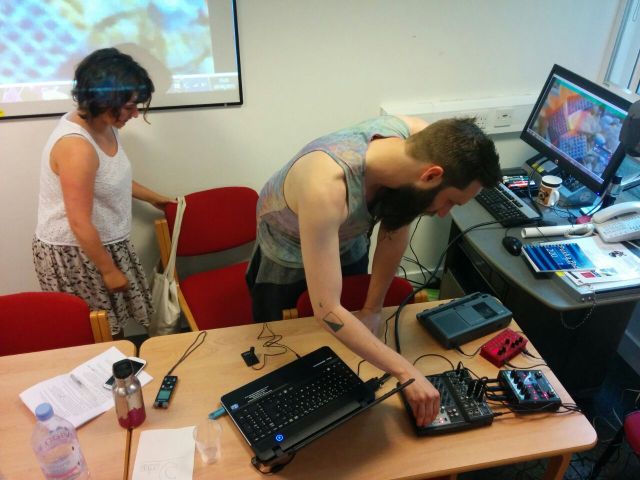
Making Panel I
Listen to a recording here
Chair: Phil Thomas
Fight something, Refuse something, Break something, With friends. Or, “Ralph, the people were screaming and you filmed them.”
Ralph Dorey
This lecture will outline these three areas, as well as counterpoints which resist the production of value, the reenforcement of hegemony and the denial of subjectivity beyond complicity. Drawing on The Situationist International, the individual and collaborative writing of Gilles Deleuze and Felix Guattari, George Bataille, Donna Haraway and Judith Butler the lecture will propose a concept of ludic nonproduction and collective mythmaking. In contrast to its labour conditioning pretender “sport”, collective play (Adventure Play, the Edelweiss Pirates, resistance occupations, vandalism, sabotage, political illegalism, insurrection and a multiplicity of formless events beyond these)frequently privileges difference, instability and damage as its ephemeral form is brought into being moment by moment by the elements of its comprising assemblage.
Making as Learning: Rethinking Affordances of Cultural Artifacts
Zaza Kabayadondo
Let’s examine a scene where six Zimbabwean medical professionals construct a low-fidelity prototype, a rough physical representation of an idea they have been exploring all morning. Their idea is a bottle- feeding prosthetic that could help an HIV-positive mother simulate breastfeeding her child when she is in conservative social company. Next to the team is a bin overflowing with scrap materials—egg cartons, chicken wire, old mesh ribbons, and polystyrene food containers—materials that take on a new life as the participants jointly make. The thing being made not only choreographs team member’ activities; it makes different futures imaginable; and amplifies tensions in the team. I tease out three distinct layers of perceptual reasoning that are instilled in the prototype as it is constructed: 1) the computation of scenarios for using the bottle-feeding prosthetic (“mental”); 2) the tensions over breastfeeding that influence how the team approaches collaboration; and 3) the interweaving of material qualities with political perspectives that is unique to Zimbabwe as a setting for making. Gender and informal activity, kukiya-kiya, are useful analytical points for understanding how a thing becomes saturated with fluid sociocultural relations and contested perceptions of one’s placement in global power structures. The analysis culminates in a set of provocations for the framework of “affordances” critical to the design of learning tools.
Making: Undergoing not Doing
Stuart Bennett
If we accept that art objects are not knowledge artefacts [Scrivener, S. The art object does not embody a form of knowledge. Working Papers in Art and Design 2 (2002)] then what types of knowledge are generated through making and how is this knowledge shared without the art object being rendered as a by-product of a knowledge generation process?
Addressing the problem from the standpoint of fine art education as a process of self-discovery, and as a practitioner currently on a research sabbatical, I propose to discuss the process of making as three distinct but entangled apprehensions.
Form: Alertness. Being in the moment, attentive to the fabric and impression of the conditions and environment. Being human.
Transformation: Understanding material. Enabling the evolution of an idea through responding to matter.
Information: Acquiring experience from published knowledge. Finding a context.
Making involves learning from a variety of different materials. ‘Just making things’ is disingenuous and lacks methodological focus. Making should open up perceptions of what is going on in our world so we can respond to it not just describe or represent it. This requires an understanding of an intermingling of the three apprehensions which are crucial to polymorphous nature of the environment of production: a sense of who, how, where, when and why, of undergoing not just doing.
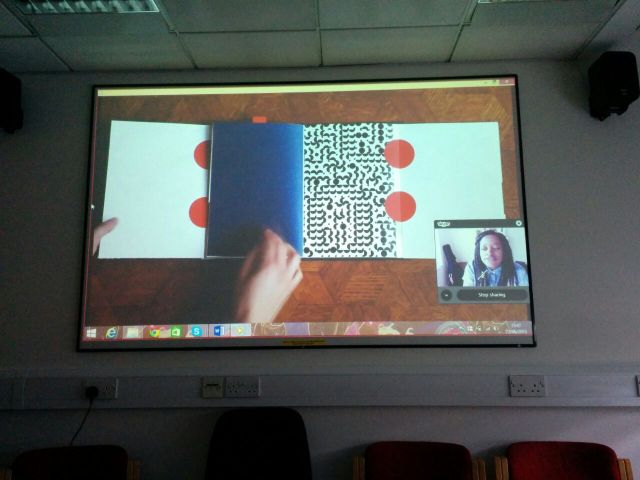
Making Panel II
Listen to a recording here (made in London, the track consists of an introduction from Ali Eisa via Skype, speaking from Rupert in Vilnius, Lithuania. Then it cuts to the London audience discussion about technological mediation, after poor Skype connection made it impossible to hear/witness the events in Vilnius. )
Chair & Respondent: Ali Eisa, Shama Khanna
Presentation of Works & Roundtable Discussion Streamed from Rupert, Vilnius
Augustus Serapinas Elena Narbutaite Viktorija Rybokova Vytenis Burokas
This event will bring together a group of contemporary artists who will present and discuss their work in the context of exploring, expanding, complicating and re-imagining the practice and boundaries of ‘making’. Their works provide challenging notions of what and who ‘making’ might involve as well as its experience, performance and reception by publics. They explore diverse processes and materials including: the making of hidden spaces, intimacy and contemplation (Serapinas); light, technoscientific invention and perception (Narbutaite); the architecture of books and archives (Rybokova); microbes, social histories of brewing and the generative state of inebriation (Burokas). There will also be a live response to the works and discussion unfolding through the curation of images, further exploring the relationship between making and the potentials of digital and technical mediation (Khanna).
In recent years there has been an increasing and renewed significance of“making” as a valued, contemporary, socio-cultural practice. This is evident in the proliferation and resurgence of popular material practices such as craft and artisanship, digital and personal fabrication, amateurism, DIY and prosumption.
‘Making’ has also developed significant traction and critical attention within academic fields such as the social sciences, expanding on the primacy of text to engage notions of the visual, sensory, live and inventive as crucial in the making of research.
However, the logic behind naming such practices ‘making’ invites numerous questions and concerns. Broadly speaking, given such a breadth and heterogeneity of ‘making’ practices, to what does this often colloquial yet conspicuous term really designate or refer?
Does it capture a shared, human sensibility of the hand in its continued exploration of materiality or a more complex, oblique constellation of skills and techniques? What is specific about the relationship between ‘maker’ and ‘material’, what kinds of actions, processes and labours must be performed? How might this assume or challenge normative, humanist and essentialist understandings of subjectivity and agency? Given the primacy of capitalist production that has so comprehensively furnished the contemporary world, how does ‘making’ intersect, intertwine, intervene or diverge from these wider socio-technical conditions? If ‘making’ foregrounds the production of and experimentation with physical media, how does this constitute a mode of knowledge production? Is this in excess, refusal or opposition to the conventionality of linguistic forms? Does this raise issues of the constitution and negation of material as necessarily physical as opposed to the immaterial, speculative or other?
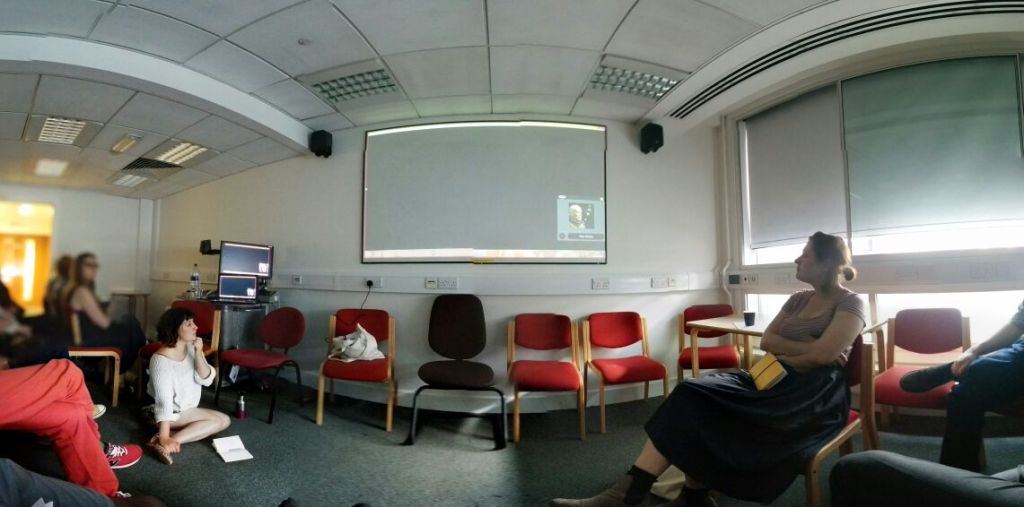
 Phil Crockett Thomas
Leave a comment